
Open-concept layouts look simple until you have to decide where the sofa, dining table, and walkways actually go. Without walls separating rooms, the furniture becomes responsible for defining spaces and determining how people move through it. Styling a room and making it truly comfortable can be difficult without prior experience. If you’re wondering how to arrange furniture in an open-concept room, choosing furniture that supports clear paths and conversation can make the process easier.
Whether your home combines the kitchen and dining room or connects more living areas, the right layout can help the room feel organized and comfortable. Here at Amish Mercantile, we understand the need to make your home function well for your family. We’re happy to discuss how pieces in our showroom would fit into your existing rooms or explore our custom options to create something perfect for your family.
What Is an Open-Concept Layout?
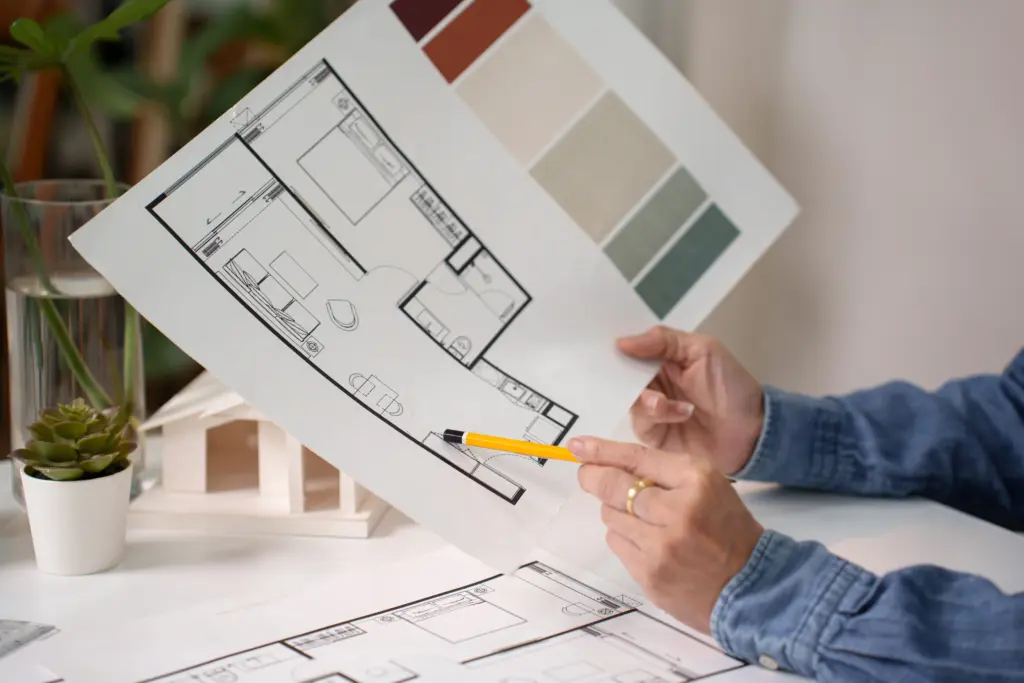
An open-concept floor plan combines two or more shared living spaces. Most often, the kitchen, dining room, and living room are connected without full walls between them, but they are typically linked so they function together while still feeling distinct.
Instead of walls creating separation, the space is defined through:
- Furniture placement
- Rugs
- Lighting
- Walkways
Many homeowners choose open-concept layouts because they allow more light, easier conversation, and more flexibility when gathering with family or guests. They work best in small homes or large homes with casual hosting styles.
Start with Function
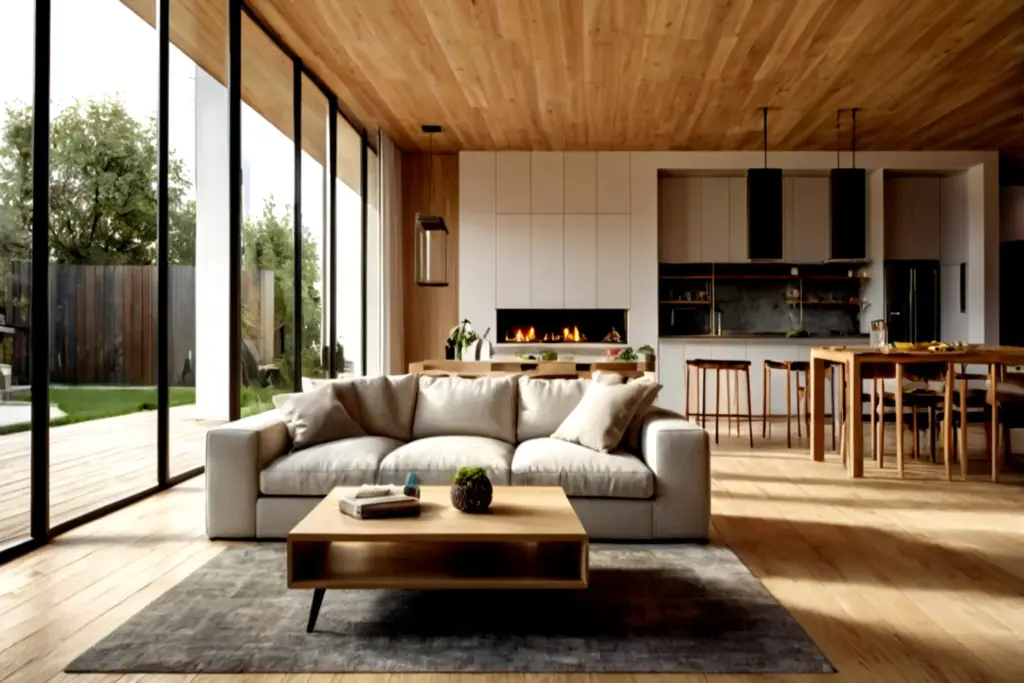
It’s so easy to miss the most important question: How does my family use this room?
Rachel Robinson, a partner in Dunham Robinson, echoes this. She explains, “We get completely away from thinking about what the traditional elements of a living room are. Instead, we get to know our clients’ lifestyles and figure out what functional needs we have to accommodate.” Sometimes, she says, “the living room needed to be a media center, a library, and an entertaining space.”
It’s easy to assume that the dining room is for eating, the kitchen is for food preparation, and the living room is for hosting guests. But what if your family’s uses are more unique?
Ask questions like:
- Do people gather around the television?
- Is the dining table used for work or homework?
- Do you host large groups?
- Do you want conversation to flow between the kitchen and the living room?
- The answers help determine both layout and furniture choices.
The answers help determine both layout and furniture choices.
Traffic flow also matters. In fact, it should always be considered right after the function. Leave enough space around dining tables, kitchen islands, and seating areas so people can move through the room without difficulty. In most layouts, 36–48 inches works well for walkways.
Going Deeper with Function
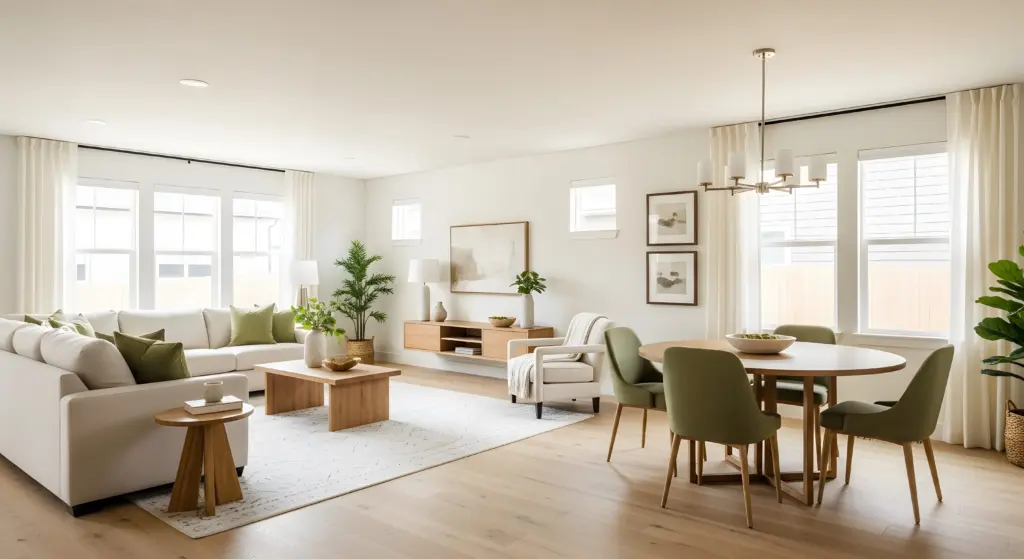
The right furniture helps open rooms feel organized without closing them off.
While separate rooms might feature more open shelving, in larger rooms, think carefully about what storage will fit your family. In smaller rooms, “wall” furniture such as hutches and entertainment centers works well. But for open rooms, it’s worth taking time to select timeless, enduring furniture that fits your family’s unique lifestyle.
If you like hosting dinner parties, consider storage like sideboards, buffets, or even bar carts. If you have lots of room and aren’t sure what to do with it, you can add a bar-height table and chairs or a game corner.
If people congregate in your living room, even if not for dinner, incorporate benches that can be easily pulled from room to room. Add accent chairs and a sectional sofa. All these pieces reach half-height, keeping the room feeling open and airy while providing just enough structure to make life comfortable. Open rooms often serve multiple purposes, so flexibility matters.
Create Separate Zones
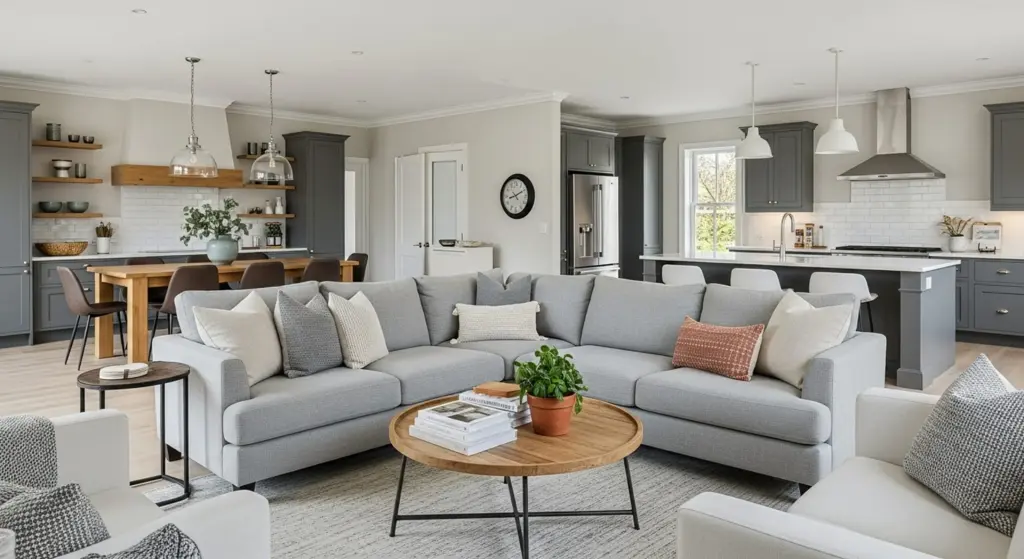
Open-concept rooms work best when each area feels defined.
Designers call open-concept rooms “a room within a room.” This means that more styles should be repeated than changed. Elements like flooring and paint provide so much coverage and work best when repeated throughout. It’s better to make smaller changes to signal different zones.
If you keep the same flooring throughout, use different rugs to anchor the seating and dining area. Lighting can also separate spaces without closing them off. Commonly, designers suggest adding recessed lights and then layering them. Pendant lights above an island can create focused prep zones, a chandelier over the dining table adds distinction, and lamps in the living room provide a softer ambiance.
Furniture placement matters as well. Instead of pushing every piece against a wall, consider floating furniture within the space. A sofa with its back against a kitchen naturally separates the living room from the kitchen. Bookshelves, especially backless ones, offer subtle shifts while also serving as furniture. Bookcases, console tables, and sideboards can also help define areas while adding storage.
Choose Furniture with the Right Scale
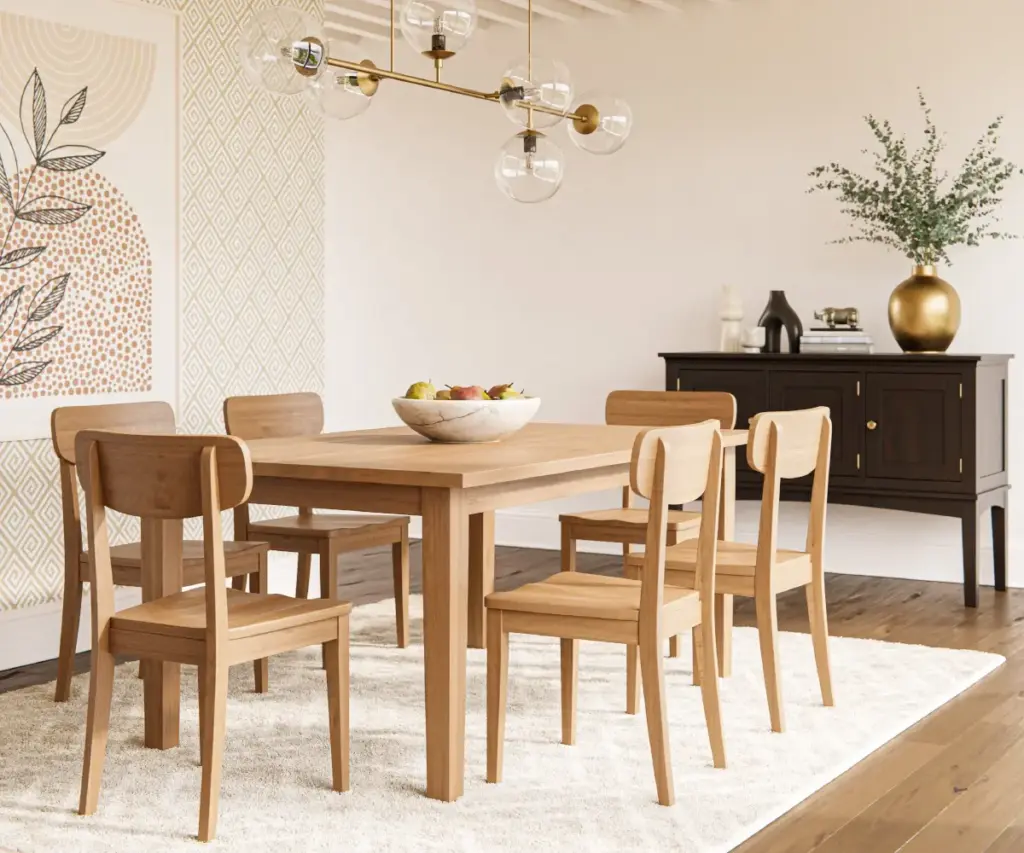
In open-concept homes, furniture should fit the room’s size.
Instead of filling the space with many small pieces, focus on a few pieces that give the room structure. A dining table, sectional, or sideboard can help anchor different parts of the room. However, if your room is small, stick with small furniture. Andrew Franz, an architect in New York, discusses this issue: “When the furniture is a little more petite, it makes the space feel larger.”
Lower-profile furniture often works well because it keeps sightlines open across the space. Furniture with simple lines can also help the room feel less crowded. Placing a floating sofa with a console table behind it works especially well to suggest a divide, provide storage, and direct the line of sight.
With open-concept layouts, sleeker furniture often looks better. Busy patterns can easily cause visual clutter. Mid-century modern and modern furniture have the simplest lines, but Shaker’s simplicity also works well in large rooms.
Traditional furniture can still work in open-concept homes, especially styles that emphasize proportion and craftsmanship rather than heavy ornamentation. They work better in larger rooms, since curved lines and embellishment can quickly overcome a small space.
Repeat Materials Throughout the Room
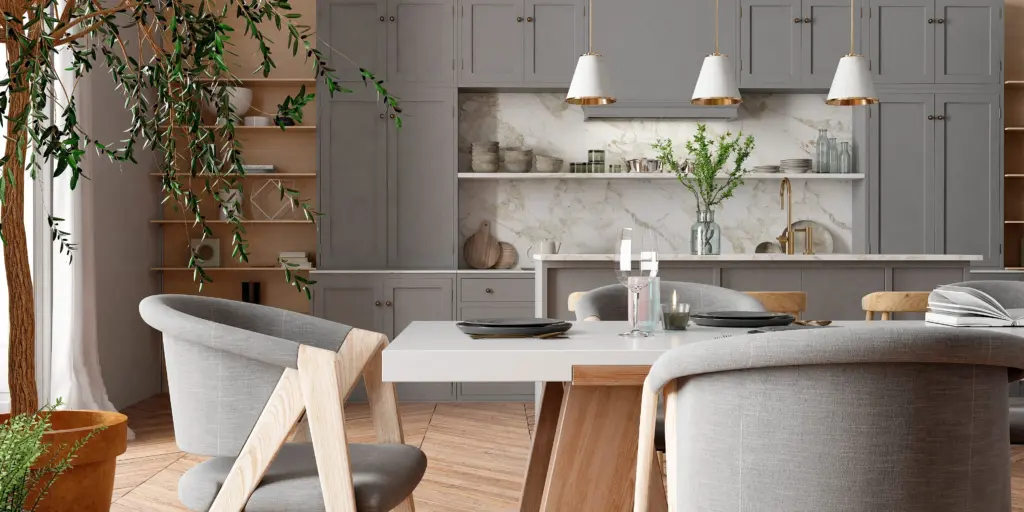
One way to connect an open-concept layout is by repeating materials and finishes throughout the home
For example:
- Repeat wood tones in dining and living room furniture.
- Use similar finishes on lighting and hardware.
- Carry colors or fabrics across different spaces.
The goal is not to match every piece exactly. Instead, repeating a few materials throughout the room helps the space feel connected. You’ll want to repeat tones subtly without overpowering a room.
For instance, if your kitchen cabinetry is oak in a lighter hue, consider getting a console table in the same stain for your living room. If your dining table is maple, repeat the pattern in end tables. If your dining chairs have a light oak stain, repeat it in your secretary desk.
Next, after you have a few repeating woods, mix in complementary furniture. For instance, if your kitchen cabinetry is lightly stained white oak, pair it with walnut or maple, which share the same undertone but have a less busy grain.
Amish wood furniture works especially well in open-concept homes because of the options. Each piece of furniture can be customized in wood type or stain color, allowing designers to coordinate any piece.
Bringing the Room Together
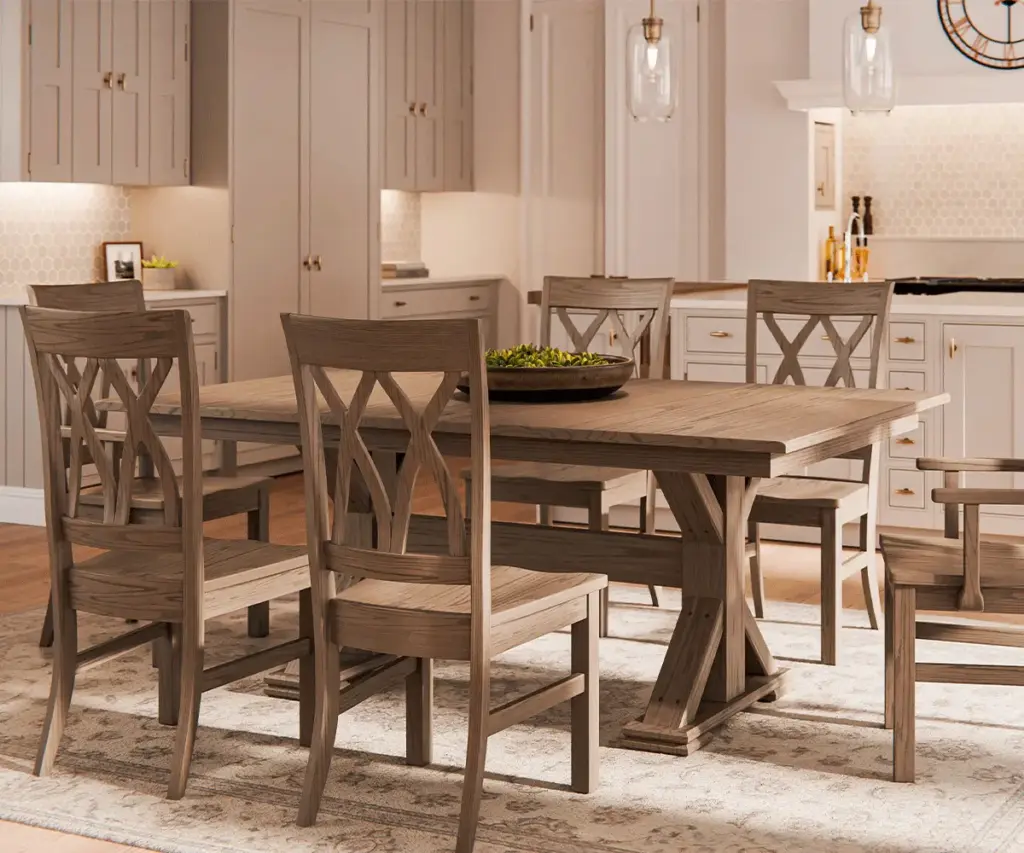
Open-concept layouts work best when furniture supports both movement and daily routines. Rugs, lighting, storage, and furniture placement all help define the space without closing it off.
Rather than treating the room as one large area, think of it as several connected spaces working together. With the right layout and furniture, each part of the room can feel distinct while still fitting into the home as a whole.
[1] https://www.nytimes.com/2024/10/08/realestate/living-room-design.html
[2] https://www.nytimes.com/2024/10/08/realestate/living-room-design.html