
Amish furniture joinery is a woodworking method where boards are shaped to fit together like puzzle pieces. This design, often reinforced with glue, creates a much stronger bond than nails or screws.
While most modern manufacturers use fast methods to save time, the Amish continue to use joinery. They believe furniture should last for generations, not just a few years. For this reason, appraisers and craftsmen often look for joinery first—it shows both the maker’s skill and the piece’s lasting value.
What Is Mortise and Tenon?
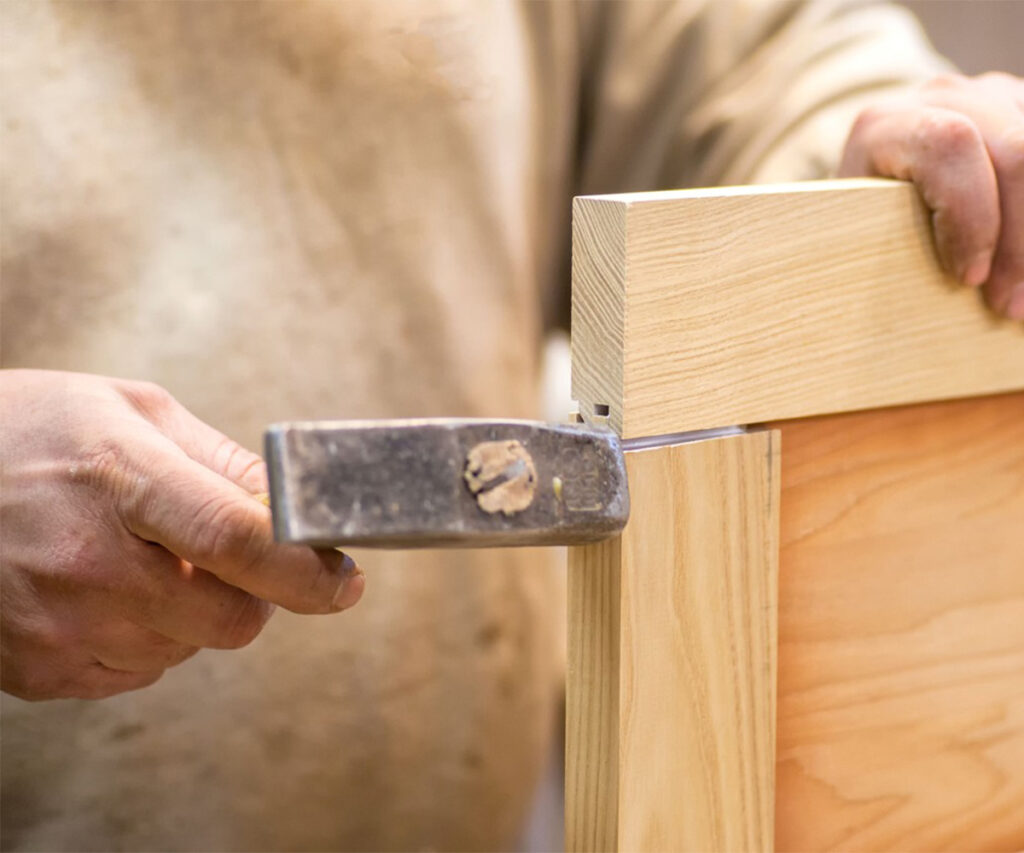
Carpenters call mortise and tenon, “the king of woodworking joints.” It joins two boards at a right angle. One board has a tenon, a small block that sticks out, while the other has a mortise (a hole the same shape). When the two are pushed together, they fit tightly. Wood glue can also be added to make the bond even stronger.
This type of joint has been used for thousands of years. Builders in Egypt, China, and Europe relied on it to create strong buildings. In China, mortise and tenon techniques helped build the tallest wooden pagoda in the world in the year 1056. That pagoda is still standing today, even though it has survived many earthquakes. The joint lets the wood bend just enough to keep the building from breaking.
Today, we can rarely afford the luxury of time it took to build these structures, but we use the same techniques for smaller constructions—solid wood furniture.
What Are Dovetails?
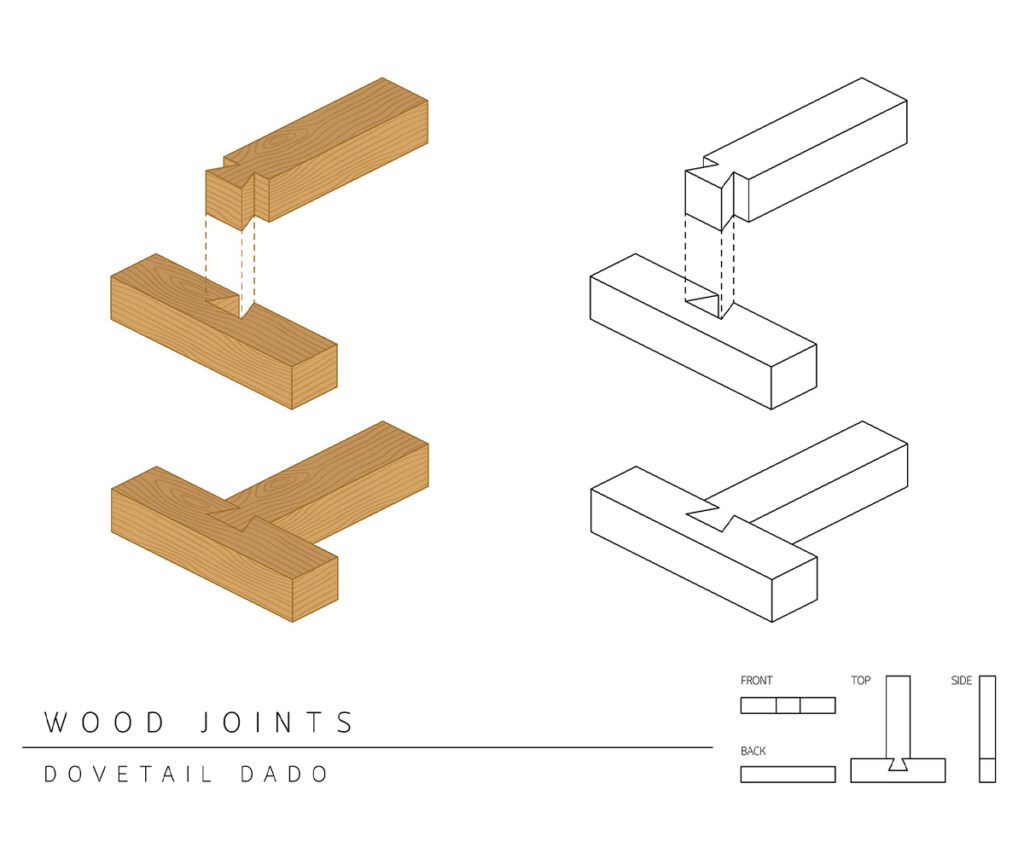
A dovetail joint gets its name from its shape, which looks like a dove’s tail spread out. The flared angles make the boards lock together tightly, creating a connection that is very hard to pull apart. It also provides two to three times more surface area for glue, adding more strength.
This joint is one of the oldest woodworking techniques in the world. Archaeologists have found it in Egyptian coffins, Hindu temples in India, and furniture across Europe and America. By the 1800s, it had become a hallmark of fine European and American craftsmanship.
Because dovetails resist pulling apart and hold up under heavy use, they are especially valued in furniture with moving parts, such as drawers. A well-made dovetail drawer can withstand decades of opening and closing without loosening or breaking.
Why these Techniques Create a Better Product
There are three main ways to connect pieces of wood: nails or screws, glue, and joinery. Many woodworkers use a mix of these methods.
Nails and screws are fast and easy, but they weaken the wood. Every hole made by a nail or screw breaks some of the wood fibers, which can cause cracks or splits over time. Mass furniture manufacturers use this method, along with wood glue.
Wood glue is stronger because it bonds directly to the wood fibers. The more surface area the glue touches, the stronger the joint becomes. That’s why joinery works so well. Joints like mortise and tenon or dovetails give the glue a lot of surface to grab onto, while also holding the wood together by shape alone.
Today, the Amish primarily use joinery and glue. When boards come together at two right angles, as they do with bed headboards and footboards, mortise and tenon joints create a strong bond. They’re also used often for table trestles.
Drawers, as moving parts, take a great deal of stress whenever they’re opened and shut. Like the zipper on a coat, they can be the first to fail, making the entire piece of furniture defunct. Dovetail drawers won’t break apart, allowing you to cherish your furniture for many years.
How to Spot Joinery in Furniture
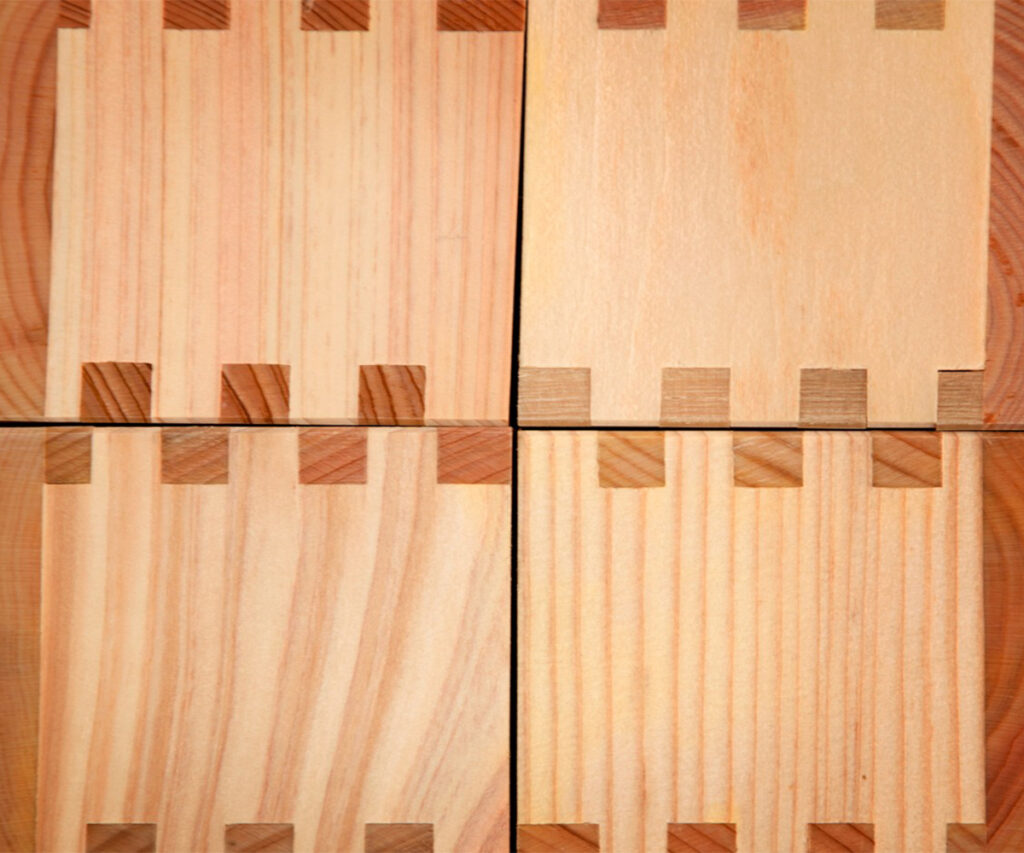
The two most common types of Amish furniture joinery are dovetails and mortise & tenon. You don’t need to be an expert to check for them. If you notice screws or nails in the main joints, it usually means joinery was not used.
Checking Drawers
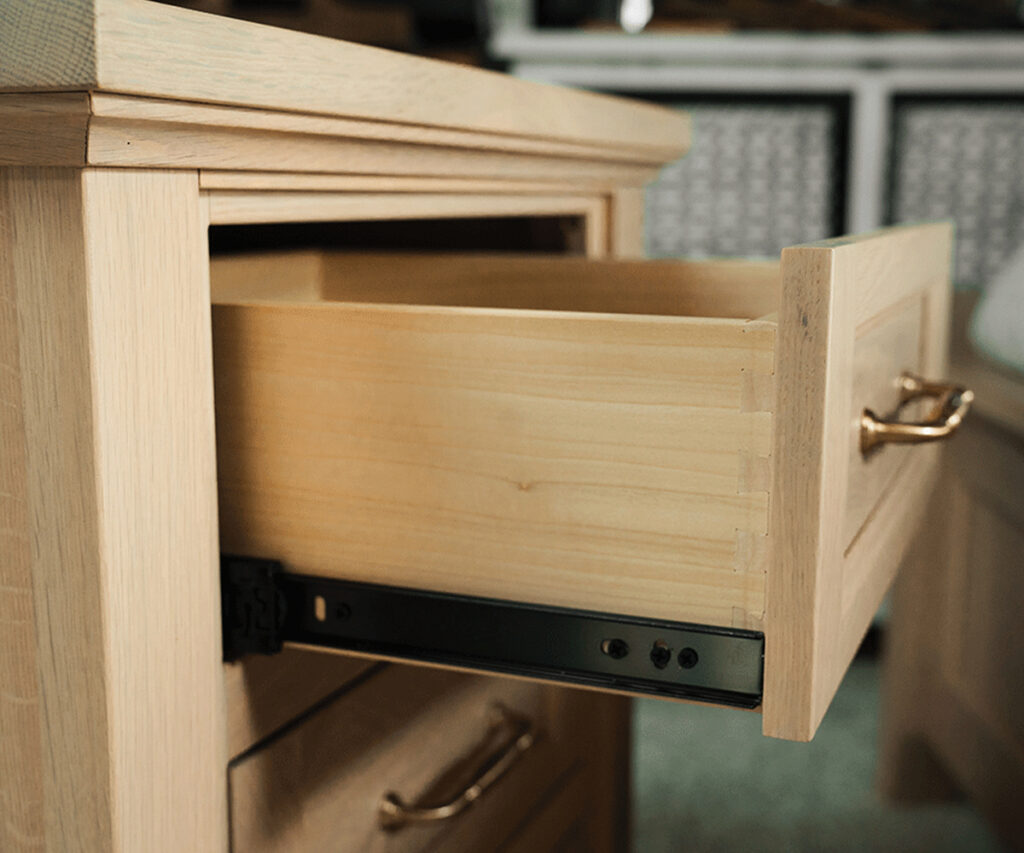
Start with the drawers. Pull one open and look at the side where it connects to the front. If you see dovetail joints—angled cuts that lock together—you can be sure the drawer is strong. If it’s only glued, the joint will not hold up as well over time.
Checking Frames and Supports
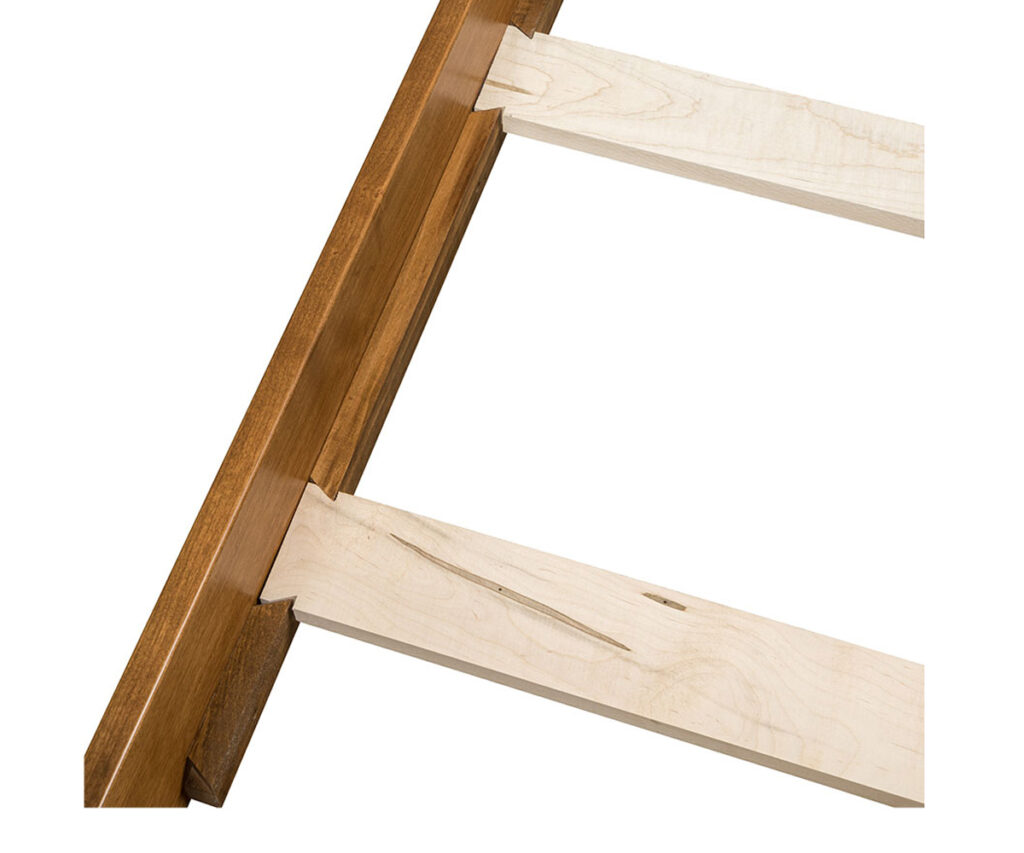
Mortise and tenon joints are harder to see because they fit inside the wood. Look closely at table legs, bed frames, or chair arms. The joints should fit tightly, with no gaps. If you press on the piece and it shifts or wobbles, the joint may not be strong.
Amish Craftsmanship Is Rich in History and Quality
For most people know the Amish as farmers. Years ago, many Amish families built their own furniture instead of buying it. During the slow winter months, farmers often worked in small home shops, making chests, beds, and dressers for their families. Sometimes, a neighbor with more skill would build a special piece as a wedding gift.
By the 1950s, farmland was getting harder to buy, and many Amish families could no longer rely only on farming. Woodworking provided a way to earn a living on less land. Small one-man shops often grew into larger businesses, especially in Ohio and Indiana, where woodworking has become one of the main Amish trades.
Amish woodworkers carry the same values into their shops that they show in other parts of life: honesty, fairness, and quality. They are clear about the types of wood they use, they set fair prices, and they take pride in making furniture that will last.
Even today, Amish builders continue to use mortise and tenon in their barns, long after most construction has stopped using it. When asked why they keep building with such old methods, their answer is simple: “It’s better.”
